 The term “Vinyasa” comes from the Sanskrit word “nyasa,” meaning “to place,” and “vi,” meaning “in a special way.” In Vinyasa Yoga, the goal is to place each movement in a deliberate, flowing sequence in coordination with your breath. Essentially, it’s a style of yoga that emphasizes movement synchronized with inhalations and exhalations.
The practice of Vinyasa Yoga typically includes a series of poses performed in a continuous, flowing sequence. The transitions between poses are as important as the poses themselves. Each movement is guided by the breath, creating a seamless flow of movement that feels almost like a dance.
Unlike some traditional yoga styles, Vinyasa does not adhere to a specific set sequence of poses. This flexibility allows for a more creative, personalized practice where instructors can vary the flow, keeping the practice fresh and dynamic.
The Origins of Vinyasa Yoga
Vinyasa Yoga has roots in the Ashtanga Yoga tradition, which was popularized by Sri K. Pattabhi Jois in the mid-20th century. Ashtanga Yoga is known for its fixed sequence of poses practiced in a continuous flow with a focus on breath and drishti (gaze). Vinyasa is often referred to as “flow” because it evolved from the Ashtanga style, although it is not bound by the fixed sequence of poses found in Ashtanga.
Vinyasa Yoga became popular in the West in the late 20th century, as more people sought out yoga practices that were physically demanding, dynamic, and spiritually grounding. Today, Vinyasa Yoga is widely practiced across the globe, with various schools of thought, styles, and approaches.
Key Elements of Vinyasa Yoga
1. Flowing Movement
The essence of Vinyasa Yoga lies in the smooth, continuous flow of movement from one posture to the next. Unlike more static forms of yoga, such as Hatha, Vinyasa keeps the body in constant motion. This approach helps build strength, flexibility, and endurance.
2. Breath-Synchronized Movement (Ujjayi Pranayama)
In Vinyasa Yoga, each movement is paired with an inhale or an exhale. This breath-synchronized movement is central to the practice and ensures that the body remains connected to the present moment. The most common form of breathing in Vinyasa is Ujjayi Pranayama (victorious breath), where the breath is deep, slow, and slightly constricted at the back of the throat, creating a soothing sound that encourages mindfulness.
3. Flow Sequences
A Vinyasa class is typically structured around several flowing sequences. Some classes may focus on specific areas of the body, such as hips or shoulders, while others may incorporate a balanced series of poses. In general, a Vinyasa sequence might include a warm-up, standing poses, balancing poses, backbends, core work, and a cool-down, often leading to a final relaxation or meditation.
4. Creative Freedom
One of the defining features of Vinyasa Yoga is its flexibility in sequencing. Unlike traditional forms of yoga like Iyengar or Ashtanga, which follow fixed sequences, Vinyasa allows instructors to create their own series of poses. This creativity allows for diversity in classes, so no two Vinyasa sessions are exactly the same.
5. Mind-Body Connection
Like all yoga practices, Vinyasa emphasizes the mind-body connection. Through the continuous flow of movements and synchronization with the breath, practitioners become more attuned to their bodies. The practice encourages mindfulness, grounding, and awareness, allowing for mental clarity and emotional stability.
Benefits of Vinyasa Yoga
Vinyasa Yoga offers numerous benefits for both the body and mind. Here are some of the key advantages:
1. Improved Flexibility
Vinyasa Yoga incorporates a wide range of poses that stretch and strengthen various muscle groups. With regular practice, your body will become more flexible, particularly in the hips, spine, and shoulders.
2. Increased Strength and Endurance
The dynamic movements in Vinyasa Yoga build strength, particularly in the arms, core, and legs. Holding postures and transitioning between poses challenges the muscles, helping to build muscular endurance over time.
3. Cardiovascular Benefits
Vinyasa Yoga can be physically intense, providing cardiovascular benefits by keeping the heart rate elevated during the flow. This type of movement boosts circulation, helps with weight management, and improves overall heart health.
4. Stress Reduction and Mental Clarity
The breath-synchronized movements in Vinyasa Yoga encourage a meditative state of mind. The practice helps reduce stress, anxiety, and mental clutter. Focusing on breath and movement can bring a sense of calm, mental clarity, and relaxation.
5. Improved Posture
By strengthening the core, shoulders, and back muscles, Vinyasa Yoga can help improve posture. It also encourages body awareness, which leads to better alignment in everyday life.
6. Enhanced Balance and Coordination
Vinyasa includes various balancing poses that improve both physical and mental balance. As practitioners focus on holding poses while maintaining the flow of breath, balance and coordination are developed.
7. Detoxification
The flowing movements in Vinyasa Yoga increase blood circulation, stimulate digestion, and promote the release of toxins from the body. Twisting poses, in particular, are known for their detoxifying effects.
Key Poses in Vinyasa Yoga
Vinyasa classes typically incorporate a mix of standing poses, balancing poses, backbends, and seated stretches. Here are some of the key poses commonly found in a Vinyasa flow:
1. Downward-Facing Dog or Adho Mukha Svanasana:
A foundational pose in Vinyasa Yoga, Downward Dog stretches the hamstrings, calves, and spine while strengthening the arms, shoulders, and core.
2. Warrior I or Virabhadrasana I:
Warrior I builds strength and flexibility in the legs, hips, and shoulders. It is often used in Vinyasa sequences to transition between other standing poses.
3. Chaturanga Dandasana or Four-Limbed Staff Pose:
Chaturanga is a core strengthening pose that also works the arms, chest, and shoulders. It’s often used as part of the Sun Salutation series.
4. Cobra Pose or Bhujangasana:
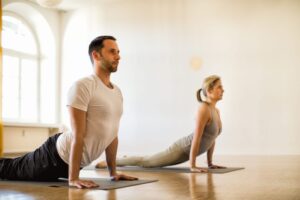
Cobra Pose is a backbend that opens the chest, stretches the abdomen, and strengthens the lower back.
5. Triangle Pose or Trikonasana:
This standing pose stretches the hips, hamstrings, and spine while opening the chest.
6. Tree Pose or Vrksasana:
A balancing pose that improves stability, focus, and concentration while opening the hips.
Written by Omkar Patel and published on https://upashanayoga.com/vinyasa-yoga-a-complete-guide-to-practice-benefits-and-key-pose 30th October 2024