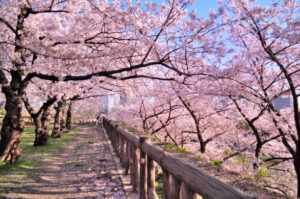
Cherry blossoms in park in Osaka Prefecture
Which vedantic text does the saying come from?
This beautiful phrasing is actually an English translation of Sutra 2 from the Pratyabhijnahrdayam (The Heart of Recognition), a foundational 11th-century text written by the philosopher Kshemaraja.
Strictly speaking, it originates from Kashmir Shaivism rather than Vedanta, though both are major schools of non-dualistic Indian philosophy.
The exact Sanskrit Sutra or verse is:स्वेच्छया स्वभित्तौ विश्वमुन्मीलयति ॥ २ ॥Svecchayā svabhittau viśvam unmīlayati || 2 ||Word-by-Word Translation
Svecchayā: By Her own free willSva-bhittau: On the canvas / screen of Her own beingViśvam: The universeUnmīlayati: Unfolds, opens up, or blossoms forthThe Difference in PerspectiveWhile Vedanta and Kashmir Shaivism both agree on non-duality (that everything is fundamentally one consciousness), they use slightly different metaphors to explain how the world exists:Advaita Vedanta often uses the metaphor of a rope and a snake. The universe is seen as an illusion (Maya) mistakenly projected onto the underlying reality (Brahman), much like mistaking a rope for a snake in the dark.Kashmir Shaivism uses the metaphor of a screen and a movie. The universe is not an illusion to be dismissed; it is a deliberate, joyful expression of supreme consciousness (Shakti) actively painting reality upon the screen of herself.


